1
We fit the cuff and set your pressure.
A cuff set to a pressure calculated for you, so a healing limb can build strength at loads it can actually tolerate. Useful exactly when heavy lifting is off the table.
What It Is
Muscle needs load to stay muscle. A freshly repaired knee, shoulder or ankle can’t take much load yet. So the strength drains out of the limb while the joint gets ready. Every week of that is strength you have to win back later.
Blood flow restriction changes that trade. A cuff goes around the arm or thigh at a pressure calculated for your limb. It slows the blood leaving the working muscle, so the muscle runs short on oxygen quickly and starts recruiting its bigger fibers early. You get a hard training signal out of loads the healing joint can actually tolerate.
This is not heavy lifting made harder. Heavy lifting works by loading tissue that’s ready for it, and yours isn’t ready. It’s also not a tourniquet. Nothing is cranked down until it feels tight, and it’s not something to rig up at home with a strap and a guess. Supervised, it’s a tool. Unsupervised, it’s a risk with no upside.
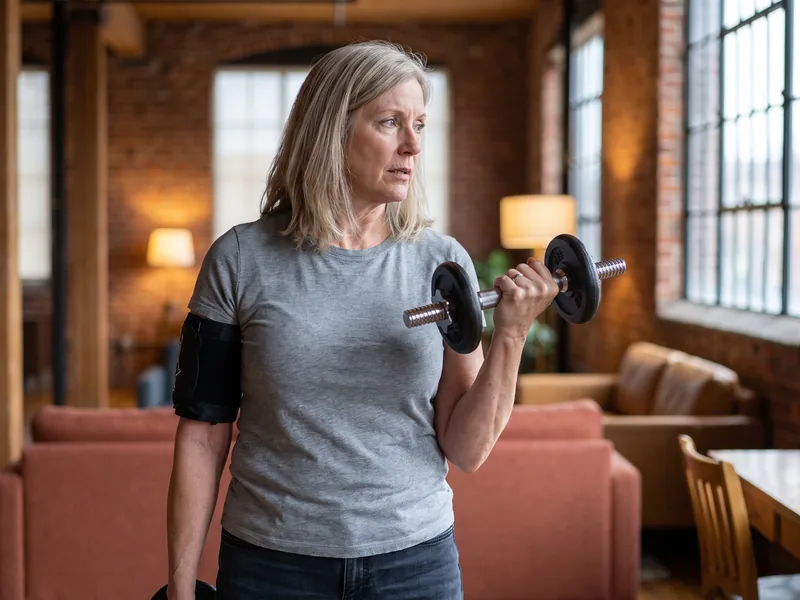 Pressure calculated for you, never guessed
What It Helps
There is a window after injury or surgery where heavy loading is off the table but losing muscle is not acceptable.
What A Session Looks Like
1
We fit the cuff and set your pressure.
2
Light sets, watched the whole time.
3
Cuff off, then the rest of your plan.
Why It Works
Strength kept while the joint heals.
Less muscle to win back later.
Progress on the weeks heavy work is out.
A shorter climb back to your normal.
Pairs Well With
Questions, Answered
Yes, when it’s set up and supervised properly. That’s the whole reason to do it here instead of at home. Your pressure is calculated for your limb, not copied off a chart. Your health history gets screened before a cuff goes anywhere near you. And you’re one-on-one with a Doctor of Physical Therapy, every visit, so somebody is watching the limb and the clock. If anything feels wrong, we stop and change it.
It’s uncomfortable rather than painful. Expect a tight, heavy, aching burn in the muscle toward the end of a set. It fades quickly once the cuff comes off. The weight itself is light, so the healing joint isn’t the thing straining. You tell us what you feel and we adjust from there. Nothing about this is a test of how much you can put up with.
Because the joint can’t take heavier yet, and that’s the whole point. Heavy load is what normally builds muscle. After surgery or a serious injury, heavy load is off the table for a stretch. The muscle shrinks while you wait it out. This lets you work light and still ask a lot of the muscle. When your tissue is ready for heavier, we go heavier. Not sure it fits your case? Call us at (973) 453-0488.
Book Your Visit
Request a time and a real person calls you back, usually within one business day. No phone tree. No ‘someone will reach out.’ Just a plan.
5.0 · 33 Google reviews
Typical response: within one business day
Step 1 of 5
That’s the hard part done. We’ll call during business hours to lock in your time and find you the earliest one that works.
Visit Us