
1
We check balance, gait and what changed.
After a stroke, with Parkinson’s, or with any condition that changed how you move. Progress here comes from deliberate, well dosed, repeated practice.
What It Is
After a stroke, or with Parkinson’s or MS, the muscle usually isn’t the problem. The signal is. Movement that used to be automatic now takes your full attention, and it still comes out wrong.
The nervous system can rewire. That’s a mechanism, not a slogan. Pick the exact movement that’s failing. Load it at the edge of what you can do. Repeat it until the brain lays down a new route. Repetition is the medicine. Dose is the difference.
A general exercise class keeps you moving. It doesn’t choose that movement, watch how you compensate, or change the dose when you improve. The choosing is the work. Fourteen years across acute care, skilled nursing and outpatient care is how your therapist knows which movement to pick, and when to make it harder. Every week you wait, the compensations get practiced too.
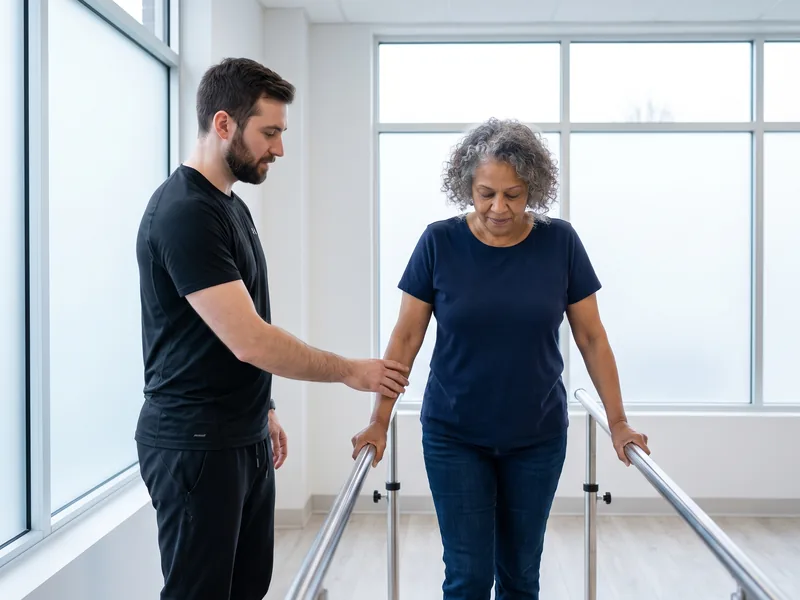 Dosed to what you can do today
What It Helps
When the signal between brain and body changes, movement has to be relearned deliberately, with enough repetition to stick.
What A Session Looks Like
1
We check balance, gait and what changed.
2
We drill the movement that’s failing, hands close by.
3
You leave with the reps that matter at home.
Why It Works
Balance you trust on stairs again.
Fewer stumbles at curbs and doorways.
Walking that stops taking all your attention.
Independence held longer, not handed over.
Pairs Well With
Questions, Answered
No. The nervous system stays adaptable, and ability you stopped using is often still there underneath the compensations. What nobody can promise you is a timeline, so we don’t. We measure where you are now, train the movement you want back, and reassess at set intervals so you get a clear answer about what is working. You do that one-on-one with a Doctor of Physical Therapy, every visit.
Not when the dose is right. Flares and heavy fatigue usually come from too much, too fast, or from fighting a movement your body has no strategy for yet. So we work at the edge of what you can do that day, not past it. Your therapist watches the quality of the movement, not just the count, and stops the set when the pattern breaks down. Rest is part of the plan, not a failure in it.
Yes, and it is worth being precise about how. Physical therapy does not cure Parkinson’s or MS. What it changes is how well you use the function you have: balance, strength, gait and the confidence to move at all. Better walking, fewer falls, independence held longer. Those are real, and they are worth defending. Questions before you start? Call us at (973) 453-0488.
Book Your Visit
Request a time and a real person calls you back, usually within one business day. No phone tree. No ‘someone will reach out.’ Just a plan.
5.0 · 33 Google reviews
Typical response: within one business day
Step 1 of 5
That’s the hard part done. We’ll call during business hours to lock in your time and find you the earliest one that works.
Visit Us