
Weeks 1–2
Pain
Turn the guarding down.
Hands-on release for the pelvic floor, hips and abdominal wall, plus breathing work, so sitting and standing stop provoking it.
What We Treat
Pain with sitting, pain with intimacy, leaking when you lift, pressure nobody ever explained to you. The pelvic floor is muscle, and muscle can be assessed and retrained.
Sound Familiar?
Two or more? Keep reading.
Why It Happens
Your pelvic floor is a real group of muscles. They sling across the bottom of your pelvis, they support your bladder and bowel, and they have to tighten and let go on cue all day long. Pain shows up when that stops working. Sometimes those muscles are gripping and never fully release, which is what a deep ache, burning, or pain with intercourse often is. Sometimes they are weak and slow, which is what leaking with a sneeze or a lift often is. Plenty of people have some of both.
Pregnancy and delivery change how the pelvic floor works. So do abdominal or pelvic surgery, scar tissue, chronic constipation, a fall onto your tailbone, and years of bracing you stopped noticing. Your hips, breathing and abdominal wall all pull on the same system. None of that is visible from the outside, and it is the reason a generic pelvic floor handout can miss badly: the exercises for a tight pelvic floor and a weak one are close to opposite. A cause-first evaluation sorts out which one you actually have before anybody hands you a plan.
The Honest Truth
You are the one everyone else leans on, which is exactly why you are the last one to get seen. Nobody regrets starting too early. Plenty of people regret waiting.
How We Fix It
Every plan has an endpoint. Here’s what the four phases look like for pelvic pain.
Weeks 1–2
Pain
Hands-on release for the pelvic floor, hips and abdominal wall, plus breathing work, so sitting and standing stop provoking it.
Weeks 2–6
Prime
You practice relaxing and contracting those muscles on purpose, timed with your breath. Coordination matters more here than effort does.
Weeks 6–10
Perform
Deep core, hip and glute strength come back, so lifting a toddler, a sneeze, or a full day on your feet stops landing on your pelvic floor.
Weeks 10+
Prevent
Lifting mechanics, running or lifting again if that’s your thing, and bladder habits that hold the result: that’s the endpoint, not just another appointment.
She was immensely helpful in helping me rebuild my core and pelvic floor after having my son. She allowed me to feel comfortable working with her right away and truly listened to, and addressed, my concerns.
Shared by Sara L. · Postpartum core and pelvic floor
Questions, Answered
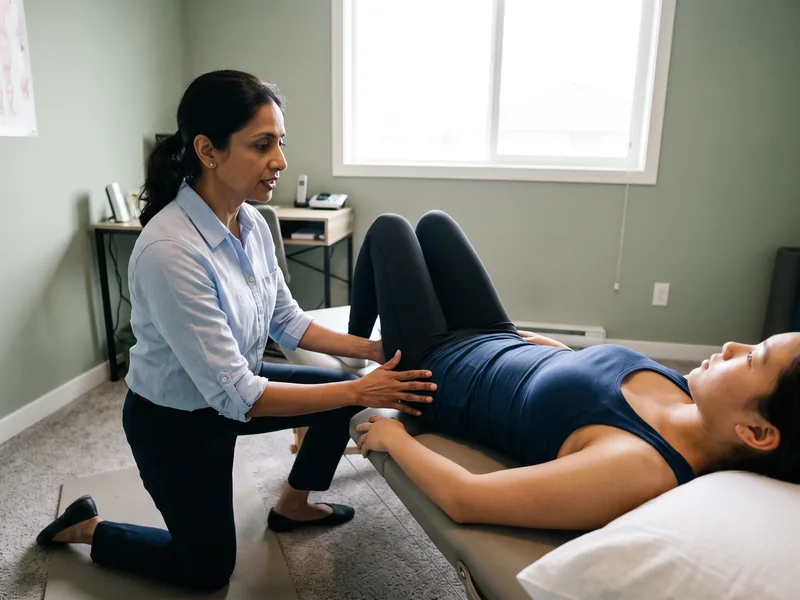
It starts with talking, not with an exam. You describe what happens and when, and you get asked about bladder, bowel, birth history and pain, because those answers narrow things down fast. The physical part starts on the outside: posture, breathing, hips, abdominal wall, and how your pelvic floor responds when you cough. An internal exam is one part of a complete pelvic floor assessment. It means one gloved, lubricated finger, used to feel whether those muscles contract and release the way they should. It gets explained before it happens, it is your decision, and you can decline it or wait until another visit. There is real work to do either way. The room is a private treatment room with the door closed, and Dr. Namrata is the only person who will be in it with you. Nothing happens until you say yes.
Common, yes. Normal, no. Leaking when you sneeze or lift, pain with intercourse, pressure or heaviness, pain that is still there months after delivery: a lot of women live with these and very few get examined for them. Your pelvic floor is muscle and connective tissue. It gets stretched, scarred and deconditioned by pregnancy and birth, and like any other muscle it answers to assessment, loading and retraining. Six weeks postpartum or sixteen years postpartum, that is still true. Being told to live with it was bad advice, and it was never a sign you were coping badly.
You get a straight answer at your evaluation, once your therapist has actually examined you, and not before. What you can count on is the shape of it. Pelvic floor rehab is a course of care with a beginning and an end, not something you manage for the rest of your life. Your plan runs through four phases, Pain, Prime, Perform, and Prevent, and you will always know which phase you are in and what is left. You work one-on-one with a Doctor of Physical Therapy, every visit, so nothing gets handed off and no session gets wasted.
Book Your Visit
Request a time and a real person calls you back, usually within one business day. No phone tree. No ‘someone will reach out.’ Just a plan.
5.0 · 33 Google reviews
Typical response: within one business day
Step 1 of 5
That’s the hard part done. We’ll call during business hours to lock in your time and find you the earliest one that works.
Visit Us