
Weeks 1–2
Pain
Settle the spinning down.
Positional testing finds the trigger first. If it points to BPPV, repositioning maneuvers address it directly, starting at your evaluation.
What We Treat
The room moving when you roll over in bed, then a whole day spent bracing against it. Not all dizziness is the same thing, and testing is what tells them apart.
Sound Familiar?
Two or more? Keep reading.
Why It Happens
Balance runs on three inputs. Your inner ear reports which way your head is moving. Your eyes report where the world is. Sensors in your joints report where your body is. Your brain compares the three, and when one of them disagrees with the others, you feel it as spinning, floating, swaying, or plain unsteadiness. BPPV is one of the most common causes. Tiny crystals come loose inside the inner ear canals and send a false motion signal when you move your head, which is why rolling over or looking up sets it off. That one is often resolved with specific repositioning maneuvers rather than exercises.
But dizziness is a symptom, not a diagnosis, and plenty of causes are not vestibular at all. Blood pressure, medications, dehydration, migraine, inner ear inflammation, the neck, and neurological conditions can all produce it. Physical therapy treats the vestibular and balance causes, and helps sort out whether yours is one of them. That is what a cause-first evaluation is for: positional testing, eye movement testing, balance and gait testing, done in an order that separates the causes. If your dizziness belongs to a physician instead, you will be told that plainly rather than treated anyway.
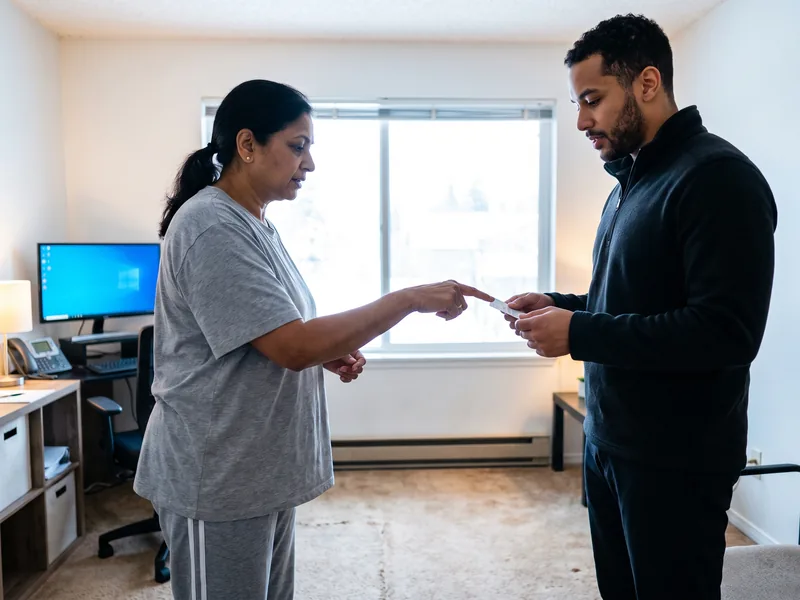
The Honest Truth
You have been managing around this quietly, and holding onto the wall on the way past. Nobody regrets starting too early. Plenty of people regret waiting.
How We Fix It
Every plan has an endpoint. Here’s what the four phases look like for dizziness and vertigo.
Weeks 1–2
Pain
Positional testing finds the trigger first. If it points to BPPV, repositioning maneuvers address it directly, starting at your evaluation.
Weeks 2–6
Prime
Gaze stabilization and graded head movement drills retrain your eyes, inner ear and neck to report the same thing at the same time.
Weeks 6–10
Perform
Standing, walking, turning and reaching get progressed onto uneven ground and into busy visual environments, with strength work for your legs.
Weeks 10+
Prevent
Stairs, dark hallways, the grocery store and backing out of the driveway get tested before you finish, plus what to do if it ever returns.
When I first started I could barely bend my back without being in excruciating pain. After just a few sessions my back started to feel better and I had more mobility!
Shared by Courtney J. · Back pain
Questions, Answered
Sometimes yes, sometimes no, and the evaluation is what tells you which. Physical therapy treats the vestibular and balance causes: BPPV, an inner ear that is no longer reporting accurately, poor gaze stability, neck-related dizziness, and unsteadiness after a concussion or a stroke. It does not treat dizziness driven by blood pressure, medication, dehydration, heart rhythm, or a condition that needs medical workup. Positional testing, eye movement testing and balance testing separate those groups, and that is the point of the first visit. If yours is not a physical therapy problem, you get told so and pointed toward the right physician instead of being treated anyway.
Some of it will bring your symptoms on for a short time, and that is on purpose. A positional test works by putting your head in the position that provokes the spinning, so it can be seen and identified. It usually lasts under a minute and it settles. You are supported on a treatment table the whole time, you are told what is coming before it happens, and you can stop at any point. Feeling briefly off afterward is common, so plan an easy ride home and a quiet hour if you can. The alternative, guessing without testing, is what keeps dizziness going for months.
It depends entirely on the cause, which is why nobody honest promises you a one-visit fix before testing you. BPPV often responds quickly to repositioning, and it can also take more than one round, or come back and need treating again. Vestibular loss and balance retraining work differently: those improve through repetition over weeks, because your brain is recalibrating. Either way your plan runs through four phases, Pain, Prime, Perform, and Prevent, and you always know which phase you are in and what is left. You work one-on-one with a Doctor of Physical Therapy, every visit.
Book Your Visit
Request a time and a real person calls you back, usually within one business day. No phone tree. No ‘someone will reach out.’ Just a plan.
5.0 · 33 Google reviews
Typical response: within one business day
Step 1 of 5
That’s the hard part done. We’ll call during business hours to lock in your time and find you the earliest one that works.
Visit Us