
Weeks 1–2
Pain
Lower the daily baseline.
Hands-on release for the pelvic floor, abdominal wall and hips, plus breathing work that turns the constant bracing down a notch.
What We Treat
Years of hearing that the pain was normal. Physical therapy does not treat the disease itself, but it does treat what it has done to your pelvic floor, your core and your movement.
Sound Familiar?
Two or more? Keep reading.
Why It Happens
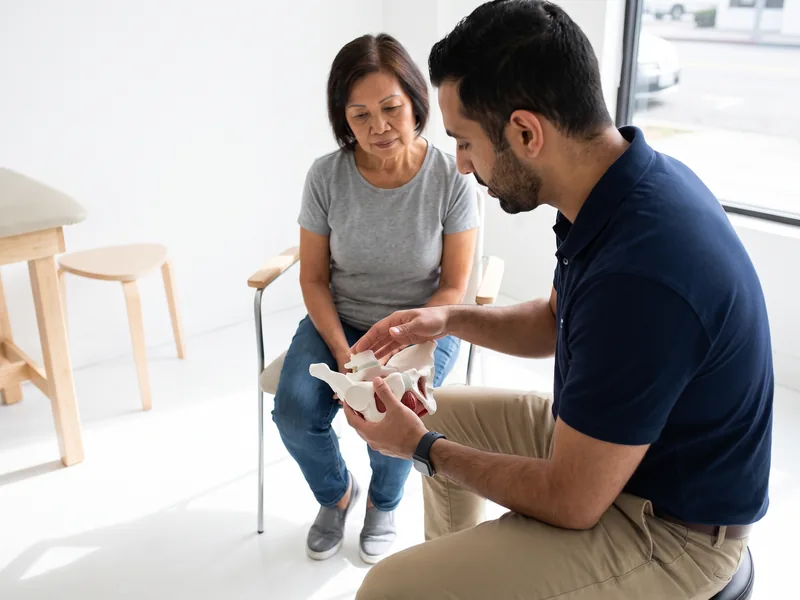
Let’s be straight about the boundary. Endometriosis is a medical diagnosis, and the disease itself is managed by your gynecologist or surgeon. Medication and excision surgery address the tissue. Physical therapy does something different, and it is not a cure. It addresses the second layer of pain: what months and years of pelvic pain do to muscle, fascia, nerves and how you move.
That layer is real and it is often a large share of what you feel day to day. Pain teaches muscles to guard. The pelvic floor, hip flexors and abdominal wall hold tension around the pain until the holding becomes its own source of pain, including pain with sitting, with intercourse and with bowel movements. Scar tissue from laparoscopy or a C-section changes how the tissue underneath glides. Bracing changes your breathing and shortens your stride. All of that is musculoskeletal, all of it responds to hands-on care and graded movement, and none of it gets addressed by a prescription. A cause-first evaluation separates what is muscular and treatable from what belongs to your physician, and you get told plainly which is which.
The Honest Truth
You spent years managing this without much help, and you got good at it. Nobody regrets starting too early. Plenty of people regret waiting.
How We Fix It
Every plan has an endpoint. Here’s what the four phases look like for the musculoskeletal side of endometriosis pain.
Weeks 1–2
Pain
Hands-on release for the pelvic floor, abdominal wall and hips, plus breathing work that turns the constant bracing down a notch.
Weeks 2–6
Prime
Scar mobility work, hip and trunk range of motion, and pelvic floor coordination, so the tissue moves instead of pulling.
Weeks 6–10
Perform
Graded core, hip and whole-body strengthening, paced around your flare weeks rather than pretending they don’t happen.
Weeks 10+
Prevent
You leave with a flare plan and a good-week plan, both written for your body: that’s the endpoint, not just another appointment.
I had a fantastic experience working with Dr. Namrata! During the last weeks of my pregnancy, she guided me through multiple sessions of personalized exercises. In addition, she gave me a lot of advice and pointers about childbirth, which I really appreciated as a first-time mom.
Shared by Princess U. · Pregnancy and postpartum
Questions, Answered
The first part is your history, in detail, without being rushed. What hurts, when in your cycle, what surgeries you have had, what happens with sitting, sex and bowel movements. The physical part starts on the outside: breathing, posture, hips, abdominal wall, and how your scars move. An internal exam is one part of a complete pelvic floor assessment, and it means one gloved, lubricated finger, used to feel whether those muscles are gripping, weak, or tender in specific spots. It gets explained before it happens, it is your decision, and you can decline it or leave it for a later visit. There is plenty to treat either way. The room is a private treatment room with the door closed, and Dr. Namrata is the only person who will be in it with you.
Here is the honest version. Physical therapy does not treat the disease. It will not remove lesions, change your hormones, or take the place of your gynecologist, your medication, or your surgery. What it treats is the musculoskeletal layer that builds up around long-standing pelvic pain: a pelvic floor that has been gripping for years, restricted scar tissue after laparoscopy or a C-section, stiff hips, a braced abdominal wall, and breathing and movement patterns built around pain. For many women that layer is a real share of the daily pain, especially pain with sitting, with intercourse, and after surgery. You will be told plainly which part of your pain is likely to respond and which part belongs to your physician.
You get a straight answer at your evaluation. It depends on how long the guarding has been there, whether you have had surgery, and how your flares run. Your plan moves through four phases, Pain, Prime, Perform, and Prevent, and you always know which phase you are in and what is left in it. Because endometriosis is a long-term condition, the endpoint is not a claim that your pain is gone forever. The endpoint is you leaving with the daily pain lower, the tissue moving, your strength back, and a written plan for flare weeks. You work one-on-one with a Doctor of Physical Therapy, every visit.
Book Your Visit
Request a time and a real person calls you back, usually within one business day. No phone tree. No ‘someone will reach out.’ Just a plan.
5.0 · 33 Google reviews
Typical response: within one business day
Step 1 of 5
That’s the hard part done. We’ll call during business hours to lock in your time and find you the earliest one that works.
Visit Us