From visit one
Pain
Settle the system down.
After a stroke this phase is often less about pain relief and more about calming tone, protecting a shoulder that lost its support, and getting fatigue managed rather than pushed through.
What We Treat
Relearning what used to be automatic, one honest step at a time. Progress after a stroke comes from deliberate, well dosed, repeated practice, not from rest.
Sound Familiar?
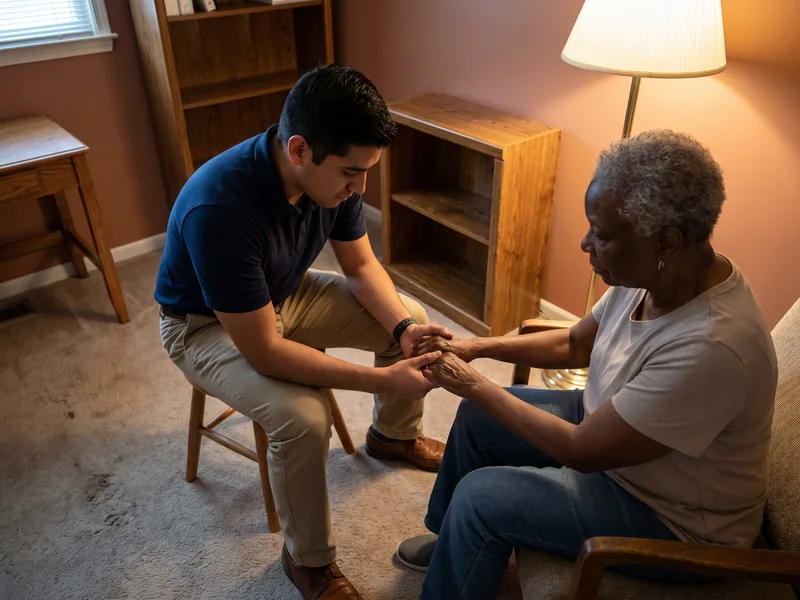
You spent years being the one everyone else leaned on. Needing help now isn’t weakness. It’s the reason to start.
Why It Happens
A stroke interrupted blood flow to part of your brain, and the area it fed stopped doing its job. Your muscles were never the problem. The instructions that reach them were. That’s why one side can feel heavy or stiff or oddly absent while the muscle itself is intact. Tone can climb, balance reactions go quiet, and your body starts borrowing from the strong side to get through the day.
Here’s the part that matters. The brain reorganizes in response to what you practice, and only what you practice. Rest doesn’t rebuild that route, and neither does general exercise. Specific movement, repeated at the right dose, often enough, is what teaches the nervous system a new way to do the thing you want back. That is a real mechanism, and it is what a cause-first evaluation is for: working out which movement, at what dose, in what order.
The Honest Truth
Nobody regrets starting too early. Plenty of people regret waiting.
How The Plan Works
Physical therapy doesn’t undo a stroke. It retrains function. Here’s what Pain, Prime, Perform and Prevent look like when the goal is movement you can trust again.
From visit one
Pain
After a stroke this phase is often less about pain relief and more about calming tone, protecting a shoulder that lost its support, and getting fatigue managed rather than pushed through.
As tone settles
Prime
Hands-on work, stretch and positioning keep joints and soft tissue free, because you cannot practice a movement your body can’t yet reach.
As strength builds
Perform
This is the engine. Specific movement, at the right dose, repeated often enough for your brain to build a better route to it. Sit to stand. Step. Reach. Again.
Ongoing
Prevent
Balance and fall prevention work, plus a home program you’ll actually keep doing, so the gains hold instead of quietly slipping back.
Extremely happy with physical therapy received at 10 on 10 after hip replacement. I can tell that I’m getting stronger after each session.
Shared by Roberta S. · Hip replacement
Questions, Answered
Here is the mechanism, rather than a pep talk. The brain adapts to what you repeatedly practice, and that capacity does not switch off after the first few months. What time changes is your starting point, not the mechanism: stiffness and compensation habits have had longer to settle, so some of the early work goes into loosening those before new movement can go in. Your evaluation tells you what is actually available to work with now, and what it will take to move it.
Not when it is dosed properly. Fatigue after a stroke is real, so it gets planned around rather than pushed through, and the same goes for tone. Sessions are built on how much you can repeat well, not on how hard you can go once, and the dose moves as you do. You work one-on-one with a Doctor of Physical Therapy, every visit, so the load gets adjusted while you are still in the room.
Physical therapy does not reverse a stroke, and nobody here will tell you it does. What it changes is function: strength, balance, walking, and using the affected side for real tasks. That is a different thing from a cure, and it is worth a great deal. Dr. Namrata Agarwal has fourteen years of hands-on patient care across outpatient, acute care and skilled nursing settings, with neurological conditions and balance and fall prevention among her specialties, and she has treated stroke. At each reassessment you get a straight answer about what is working and what comes next.
Book Your Visit
Request a time and a real person calls you back, usually within one business day. No phone tree. No ‘someone will reach out.’ Just a plan.
5.0 · 33 Google reviews
Typical response: within one business day
Step 1 of 5
That’s the hard part done. We’ll call during business hours to lock in your time and find you the earliest one that works.
Visit Us